Export Process
Five steps from station to ship.
Go to section ↓
Most quality problems happen at handovers, so we cut the handovers. We manage every step from collection at source to loading at Djibouti, with one point of contact for all of it.
Request a QuoteFive steps from station to ship.
Go to section ↓Graded twice, certified, traceable to the station.
Go to section ↓Jute bags, FOB or CIF, full documents.
Go to section ↓Export Process
Quality is decided at every handover. Each step below is managed by our own team.
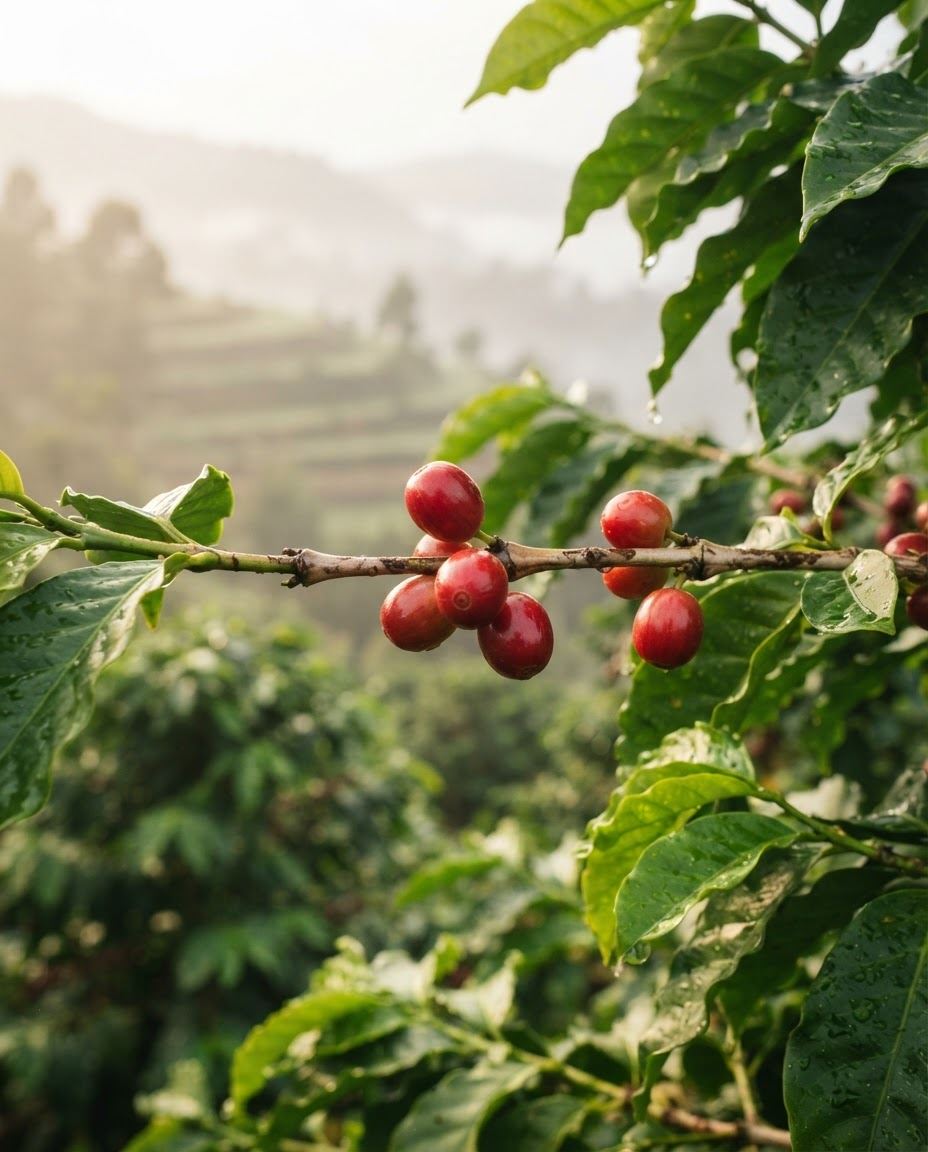
We buy directly from farmers across our six regions and pay before receipt. Each lot is recorded by origin and process.
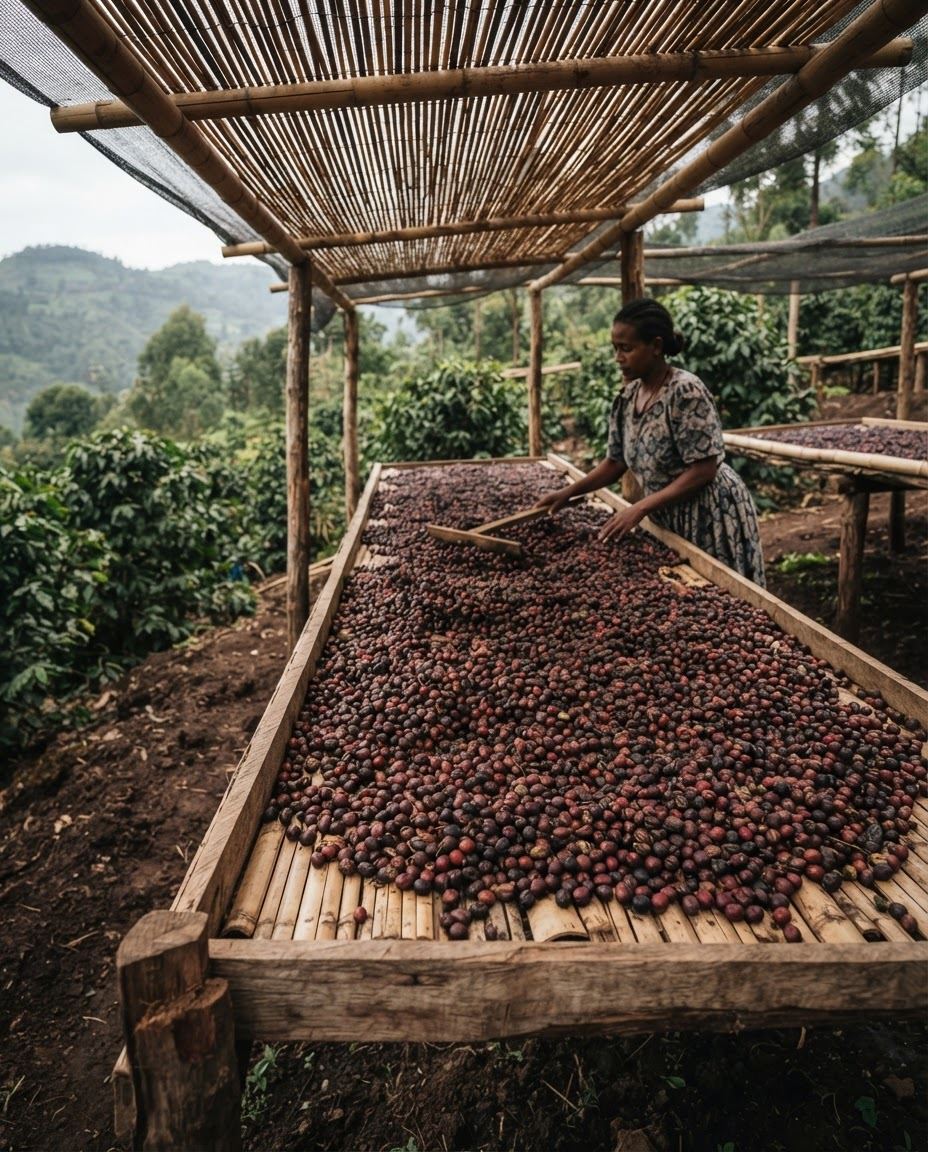
Lots travel to our warehouse under official waybills, so every bag keeps its paper trail.

Hulled, cleaned and sized, then sorted twice: by machine for density, by hand for defects.

Ethiopia's Coffee and Tea Authority cups and grades every lot. No certificate, no shipment.
Sorted, marked with your details, sealed in jute and loaded at Djibouti.
Quality & Traceability
Every bag is marked with its region, lot number and grade, so you can trace it back to the station.
Grading
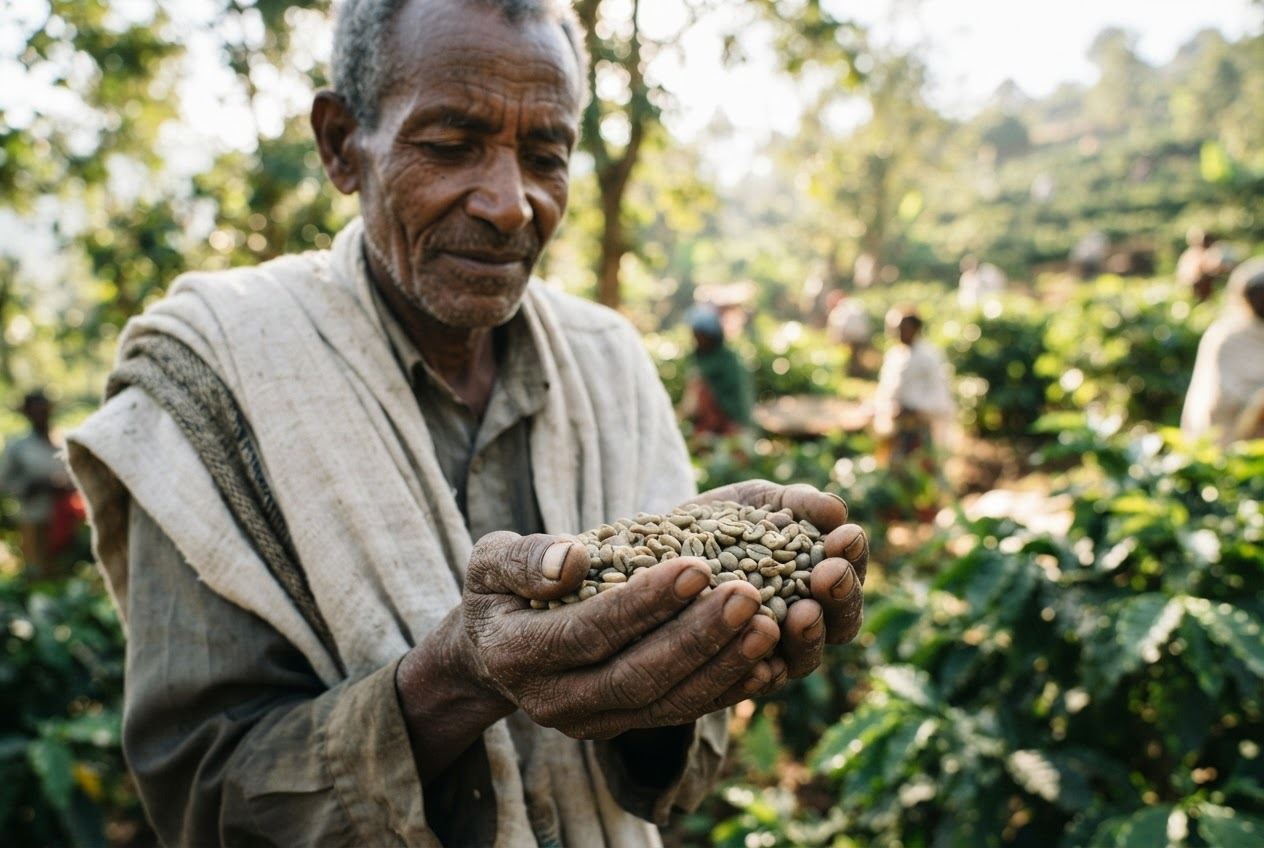
Every export lot is graded by the defects found in the green beans, from Grade 1 to Grade 5, plus Undergrade. We supply all four export grades: 1–2 specialty, 3–4 commercial.
Serious defects that damage the cup and cause off-flavours. A single one can downgrade a whole lot.
Smaller faults. They count against the grade when they add up.
| Defect | What it does to the cup |
|---|---|
| Black or sour beans | Bitter, rotten, medicinal |
| Mould | Musty, earthy |
| Immature beans | Astringent, grassy |
| Broken beans | Uneven roast |
| Insect damage | Flat, woody |
Logistics · Packing
Each bag has two layers. The jute bag handles the journey. The GrainPro liner inside keeps out humidity and keeps in aroma.

350 g / 500 g · Trial
Trial sizes of 350 g or 500 g from active lots, so you can cup before you commit.
Other sizes · On request
Standard jute bags of 60 kg, other sizes available on request.
Your mark
Company name, logo, production date and destination port, printed on every bag.
GrainPro liner (Ecotact or equivalent) included. Bags printed with your company name, logo, production date and destination port.

Logistics & Shipping
We clear Ethiopian customs and handle freight to the vessel. You choose how far we take it.
Pricing & payment
Every price we quote is transparent and regulated. That's why it moves with the market.
Payment terms
Letter of Credit (typically 90-day tenor) or Telegraphic Transfer (TT).
FAQs
Standard jute bags of 60 kg, each with a GrainPro liner inside. Other sizes are available on request. Samples are sent in 350 g or 500 g packs.
We do, all the way to the vessel at Djibouti. We quote FOB or CIF.
Trial orders run from 10 to 50 bags. Full containers hold about 320 bags.
Every lot is moisture-tested before sealing. The seal that leaves Ethiopia is the seal you open.
From the New York 'C' price, our costs and the weekly ECTA minimum export price, which we can't legally sell below.
Letter of Credit (typically 90-day tenor) or Telegraphic Transfer (TT).
Yes. We print your company name, logo, production date and destination port once payment or the LC is confirmed and final sorting is done.
Tell us what you are looking for and we will send samples and the current offer sheet.
Request a Quote