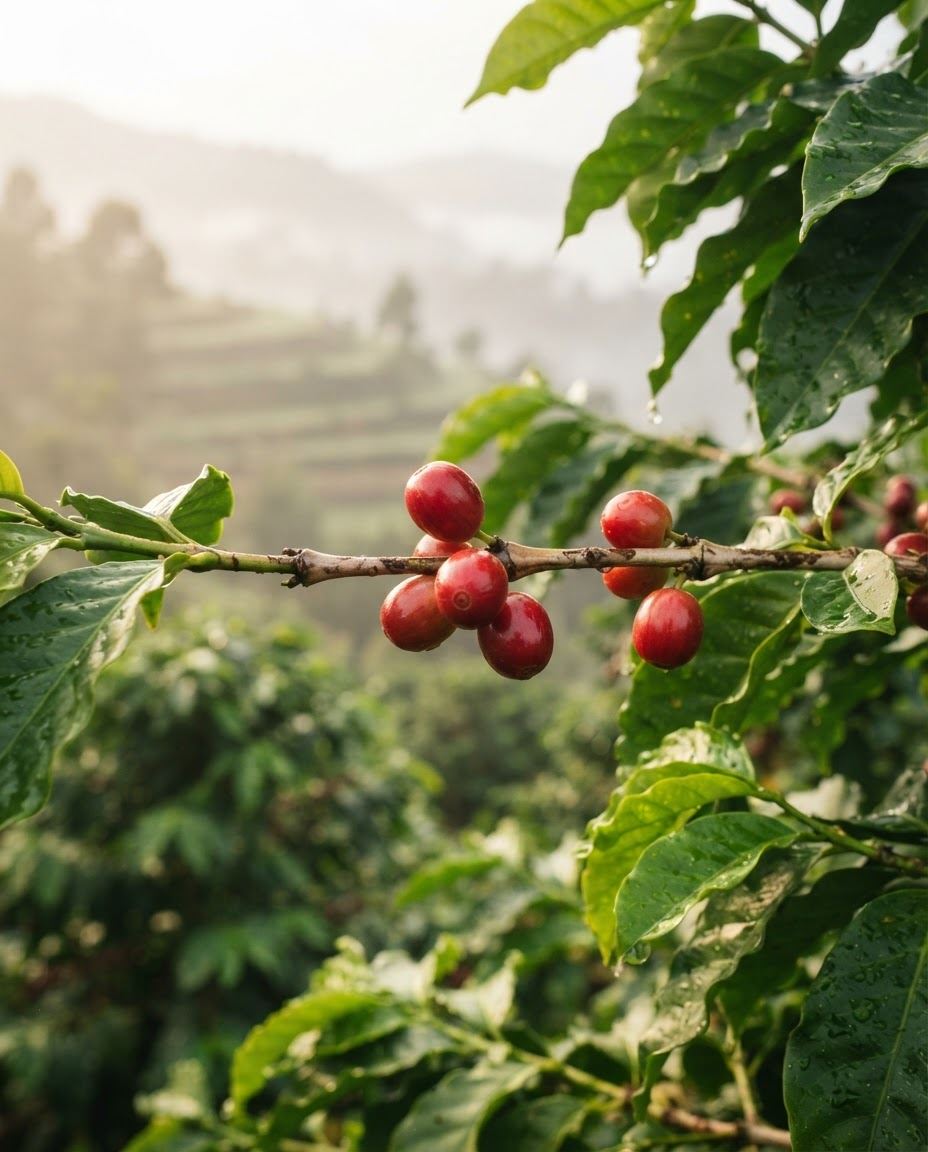
Guji
High-grown, bright and floral
Some of Ethiopia's highest farms. Washed lots show mandarin, peach and florals; naturals turn to mango and berry jam.
1,800–2,300 m
Explore Guji →
Ethiopian green coffee exporter
We source green coffee from Guji, Yirgacheffe, Sidama, Harar, Jimma and Wollega, grade every lot twice, and ship it sealed in jute. Cup the difference before you commit.

About Ewoke
We buy directly from farmers across six of Ethiopia's best-known coffee regions and pay before the coffee reaches us. We know where every lot comes from and how it was processed.
Our team manages every step between the station and the ship. Fewer hands means fewer surprises, and you deal with one supplier from sample to delivery.
Ewoke at a glance
6
Core origins
Guji, Yirgacheffe, Sidama, Harar, Jimma and Wollega, each kept as separate lots. Plus special lots from Limu, Kaffa and Gori Gesha.
1,400–2,400 m
Grown in the clouds
High altitude slows growth, creating denser beans with more complex, concentrated flavour.
60 kg
Standard jute bags
Standard jute bags of 60 kg, other sizes on request. All GrainPro-lined.
Grade 1–4
Specialty to commercial
Every lot is graded for size, density and defects before it is approved for export.
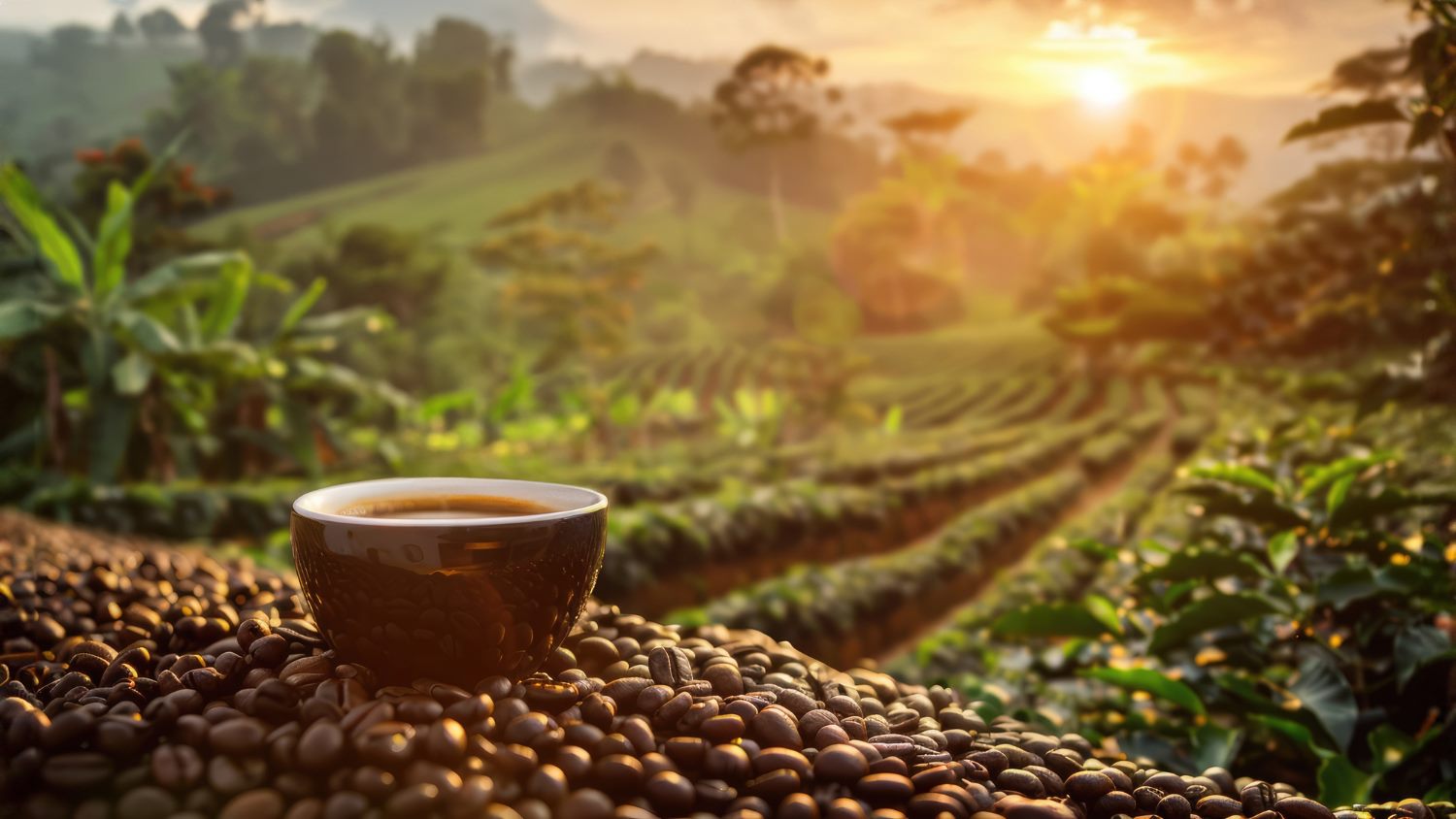
Quality control
Quality is decided before the coffee leaves Ethiopia. These four checks run on every lot we ship.

Machines and a trained team remove defects, so every lot cups clean and consistent.

GrainPro liners inside jute bags protect the beans through weeks at sea.

Every lot is moisture-tested before it is sealed, so it stays stable at sea.

Export certificates, origin papers and lot records travel with every shipment.
Coffee Origins
Ethiopia's coffee regions are worlds apart. Soil, altitude and the air itself all end up in the cup. We keep every lot separate so you taste each region's true character.
High-grown, bright and floral
Some of Ethiopia's highest farms. Washed lots show mandarin, peach and florals; naturals turn to mango and berry jam.
1,800–2,300 m
Explore Guji →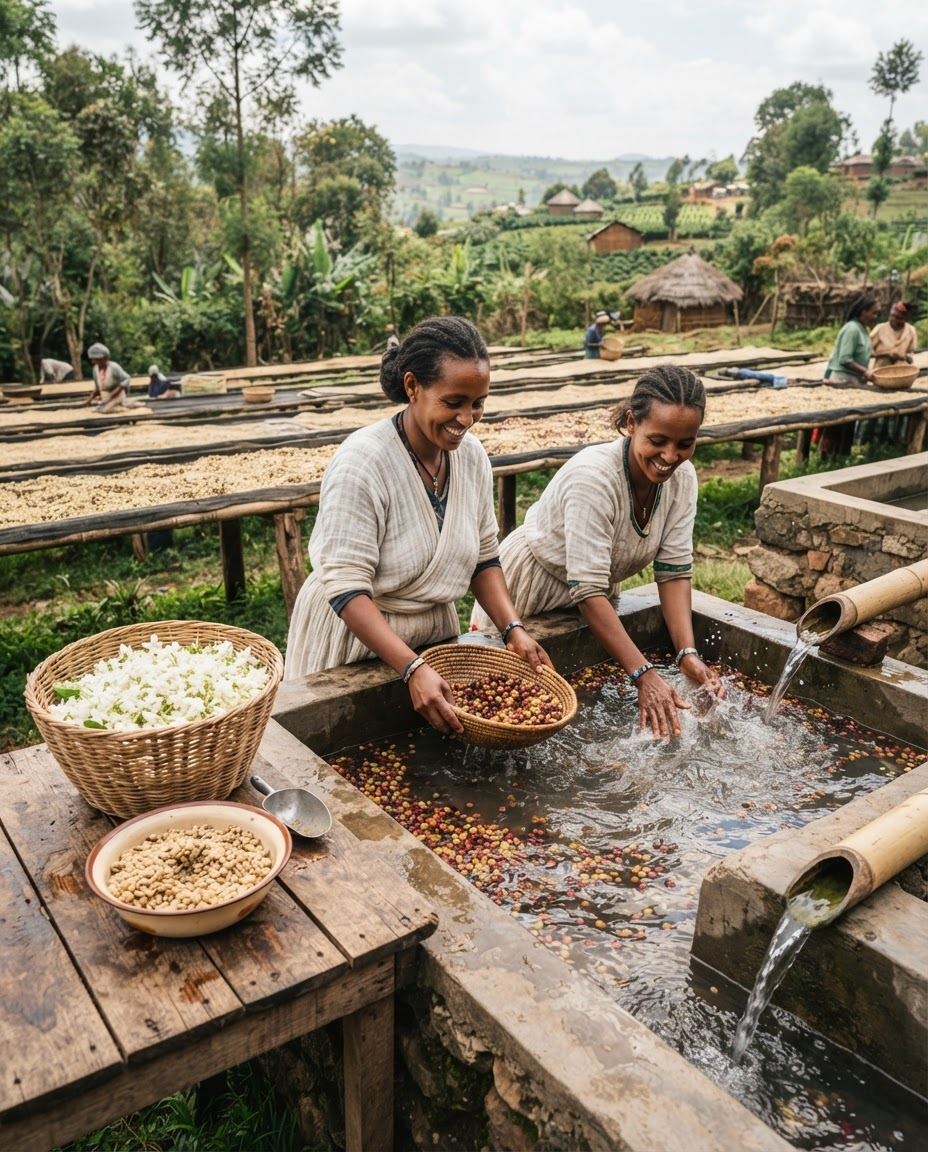
Washed, delicate and tea-like
The benchmark for washed Ethiopian coffee. Jasmine, bergamot, lemon zest and peach on a tea-like body.
1,700–2,200 m
Explore Yirgacheffe →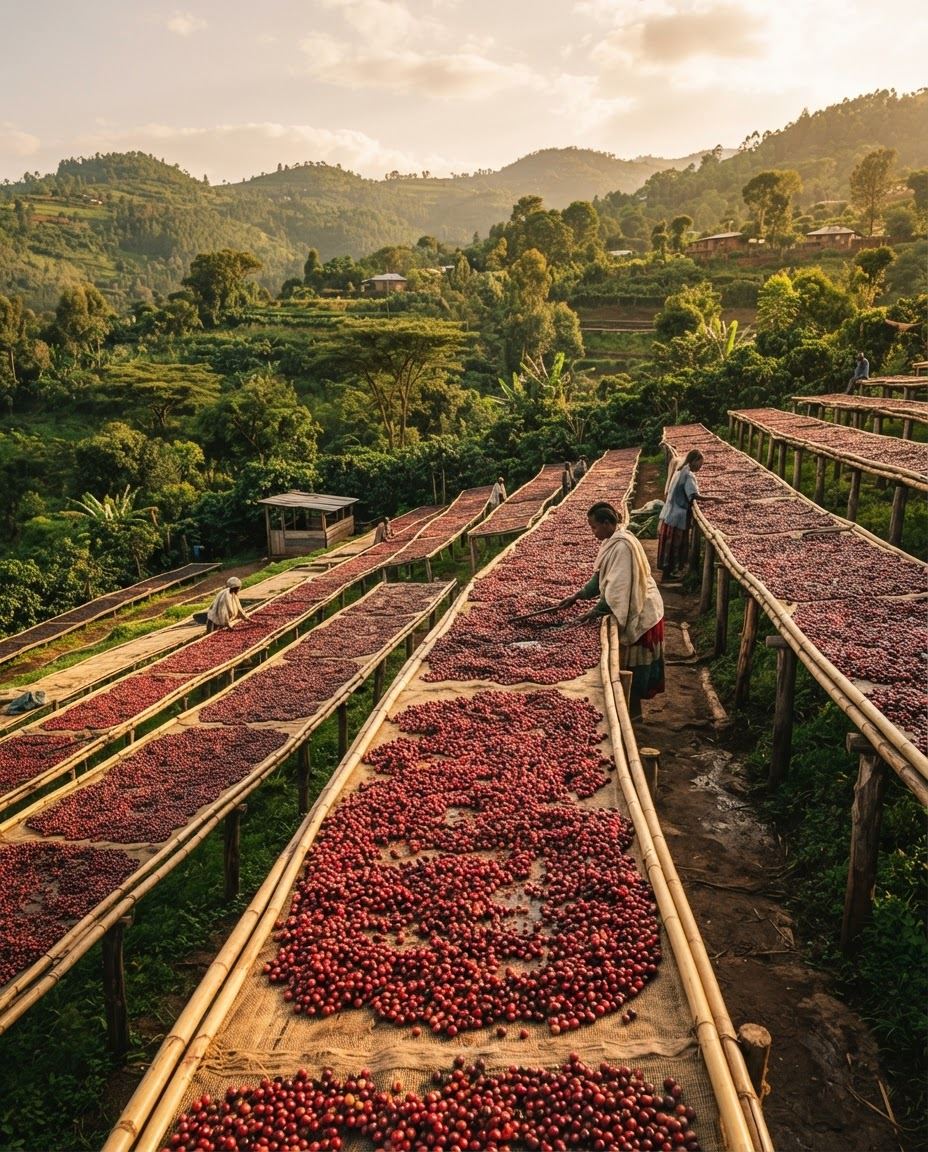
Balanced, sweet and versatile
Sold as Sidamo. Washed lots bring elderflower, orange and honey; naturals turn to raspberry and blackberry.
1,600–2,400 m
Explore Sidama →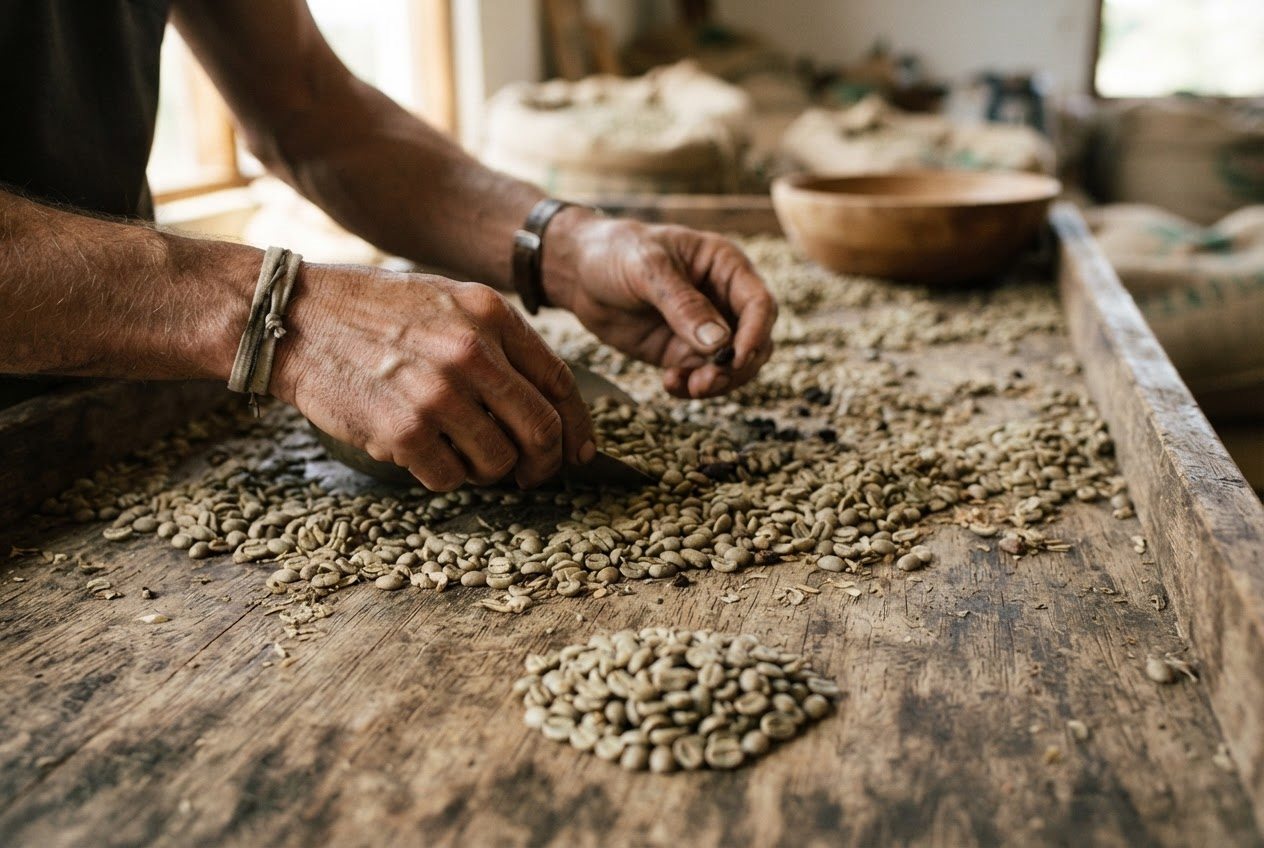
Wild, winey and full-bodied
From the eastern highlands. Blueberry, dark chocolate and spice on a heavy, syrupy body.
1,500–2,100 m
Explore Harar →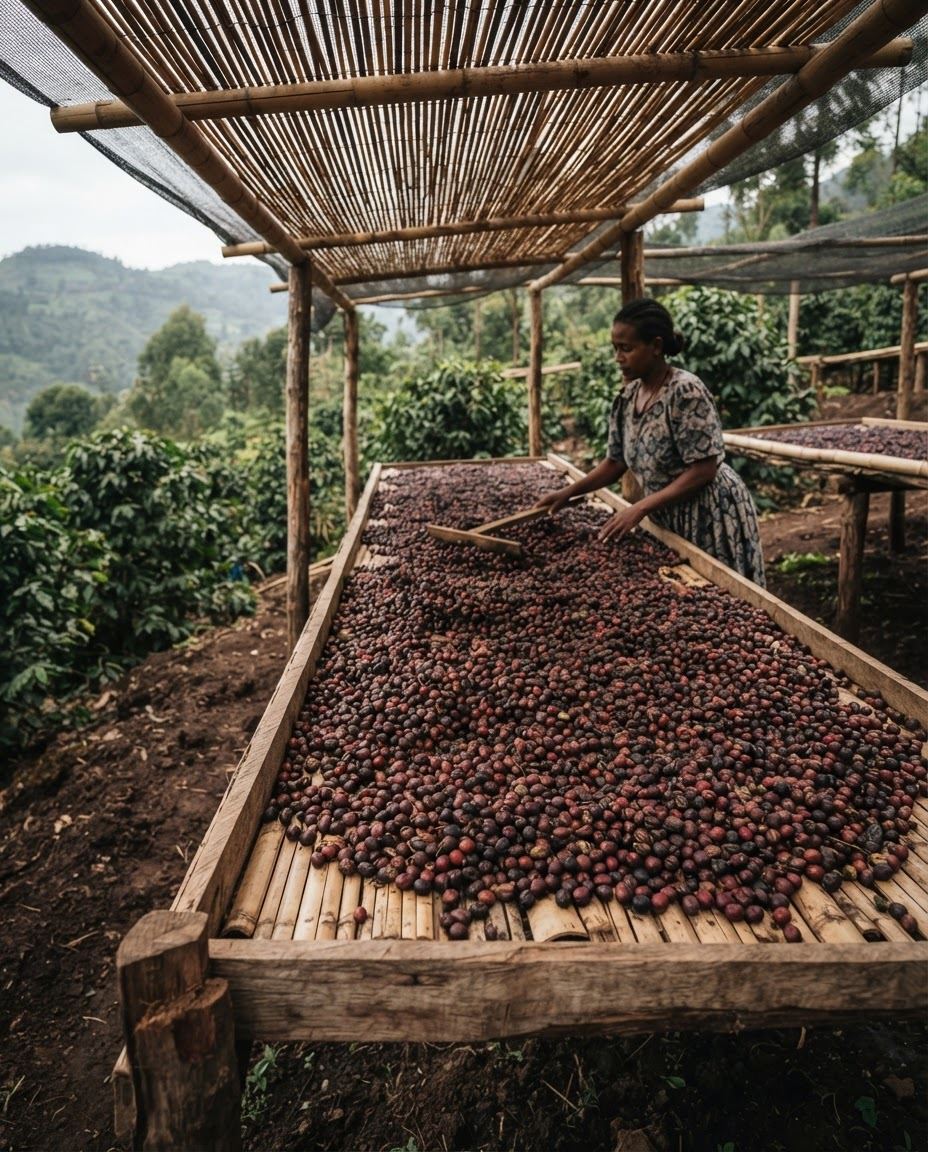
Bold, earthy and full-bodied
From western Ethiopia. Earthy and fruity, with banana and tropical notes, low acidity and a heavy body.
1,400–2,100 m
Explore Jimma →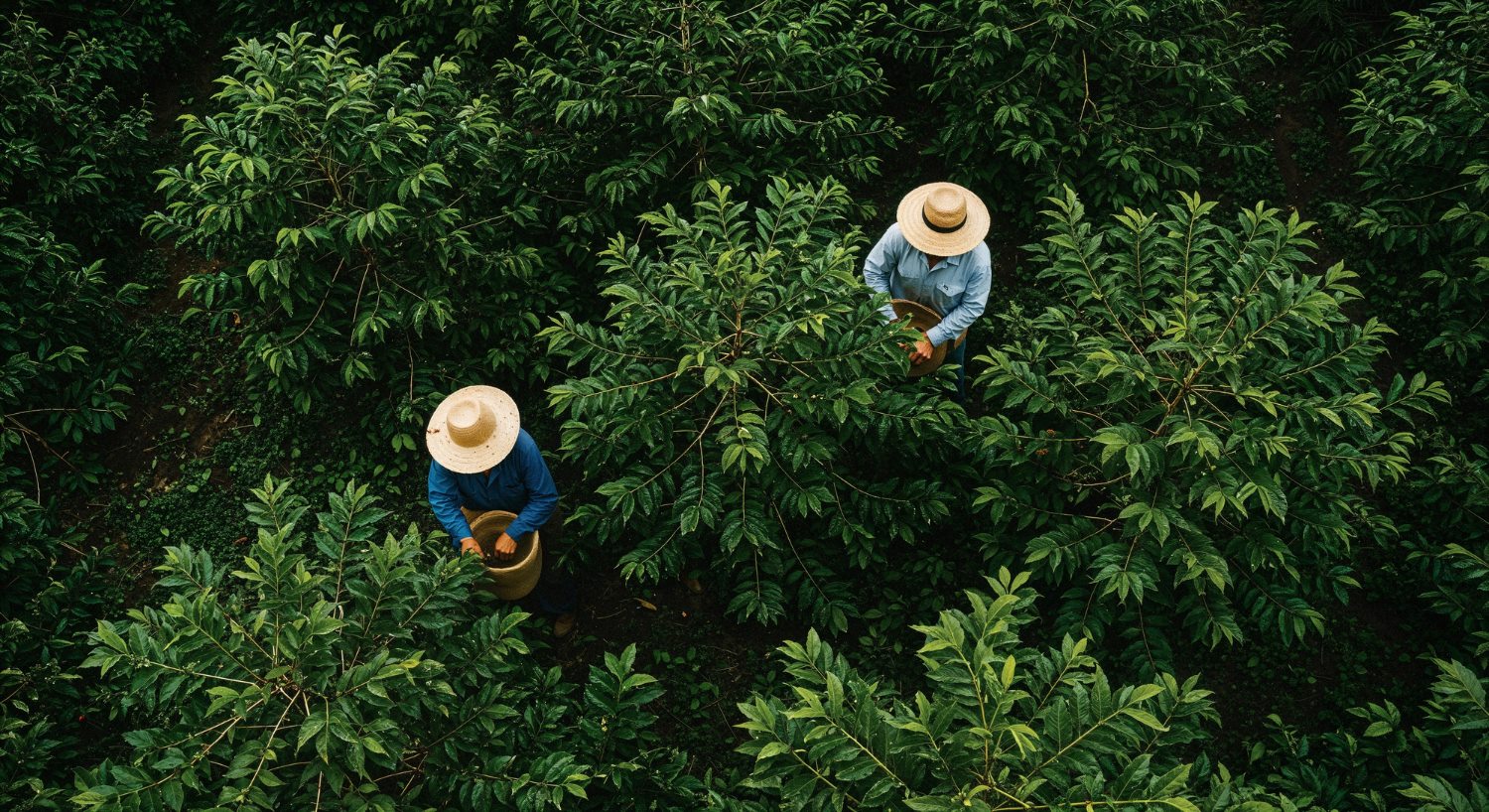
Smooth, chocolatey, approachable
From western Ethiopia. Chocolate and berry, or apple and citrus when washed.
1,500–2,100 m
Explore Wollega →Export Services
Every lot follows the same five-stage process. No shortcuts, no surprises.
Bought direct from farmers across our six regions, paid for before receipt. Each lot stays separate.
Lots travel to our warehouse under official waybills, so every bag keeps its paper trail.
Hulled, cleaned and sized, then sorted twice: by machine for density, by hand for defects.
Ethiopia's Coffee and Tea Authority cups and grades every lot. No certificate, no shipment.
Marked with your details, sealed in jute and loaded at Djibouti.
Our Coffees
The journey from ripe cherry to green bean is one we handle with care. Each method either keeps the cup clean or builds sweetness and body.
Clean, bright, origin-true.
Fruit is removed, the beans ferment up to 48 hours and dry for 12–14 days. A clean, bright cup, typical of Yirgacheffe and Guji.
Fruity, intense, jammy.
Whole cherries dry on raised beds for 12–16 days, building body and ripe berry sweetness.
Sweet, round, balanced.
Some fruit is left on while the beans dry. Sweeter than washed, cleaner than natural. Coming soon.
Wild, complex, unforgettable.
Cherries ferment in sealed tanks before drying. Limited lots with winey, tropical profiles, on request.
Packing
Every lot ships in standard jute bags with an airtight GrainPro liner inside, so the coffee you sampled arrives the way it left.

350 g / 500 g · Trial
Trial sizes of 350 g or 500 g from active lots, so you can cup before you commit.
Other sizes · On request
Standard jute bags of 60 kg, other sizes available on request.
Your mark
Company name, logo, production date and destination port, printed on every bag.
GrainPro liners included as standard. Ask us about Ecotact or other liner brands.
Coffee Catalogue
This season's lots, all forward booked. Request documents on any lot.
| Region | Sub-area | Process | Grade | Status |
|---|---|---|---|---|
| Guji | Hambela | Washed | Grade 1 Specialty | Forward booking |
| Yirgacheffe | Gedeo highlands | Washed | Grade 1 Specialty | Forward booking |
| Sidama | Southern highlands | Natural | Grade 2 Specialty | Forward booking |
| Harar | Eastern highlands | Natural, aged | Grade 4 Commercial | Forward booking |
| Jimma | Western belt | Natural | Grade 3 Commercial | Forward booking |
| Wollega | Nekemte | Washed | Grade 2 Specialty | Forward booking |
FAQs
Start small. Trial orders run from 10 to 50 bags, enough to cup, test a roast and decide. When you're ready, we ship full containers of about 320 bags.
We pack 350 g or 500 g samples from active lots and send them by express courier within 72 hours of your request.
We do, all the way to the vessel at Djibouti. We clear Ethiopian customs and quote FOB or CIF, whichever suits you.
Every lot is moisture-tested before sealing and packed in a GrainPro liner inside the jute bag. The seal that leaves Ethiopia is the seal you open.
Request a Quote
Request samples, explore available lots, or discuss a sourcing partnership built around traceable quality, freshness and long-term supply.
Skip the middlemen. Source from Ethiopia's best-known growing regions through one team that manages the export process, from regional storage to the vessel.